Entertainment
28 Years Later: Everything You Need to Know About the Long-Awaited Sequel

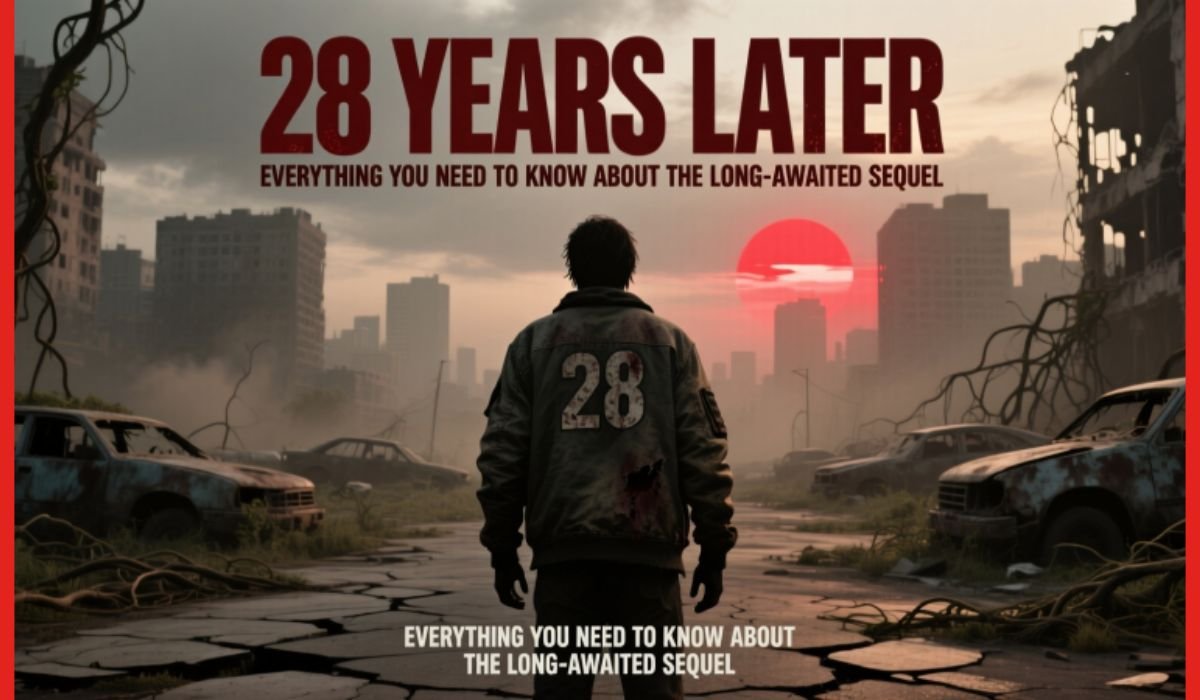
The Rage Virus is back, and it’s more terrifying than ever. After years of speculation and longing from fans of the groundbreaking zombie franchise, 28 Years Later has finally arrived. Directed once again by Danny Boyle and written by Alex Garland, this long-anticipated sequel continues the legacy of 28 Days Later (2002) and 28 Weeks Later (2007) with a chilling, emotional, and action-packed new story. But this isn’t just a nostalgic trip back to a world overrun by the infected — it’s a bold, horrifying leap into a future where the virus has evolved, societies have fractured, and survival means confronting more than just monsters. Whether you’re a longtime fan or a newcomer, here’s everything you need to know about 28 Years Later.
Quick Bio Information
Title: 28 Years Later
Director: Danny Boyle
Writer: Alex Garland
Franchise: Third film after 28 Days Later and 28 Weeks Later
Main Characters: Spike, Isla, Jamie, Dr. Kelson, Sir Jimmy Crystal
Setting: Holy Island and UK mainland
Main Threats: Mutated Infected (Alphas), Cults, Environmental Collapse
Release Year: 2025
Confirmed Sequel: 28 Years Later: The Bone Temple (2026)
Notable Themes: Mutation, Grief, Morality, Survival, Cults
Infected Evolution: Now capable of reproduction and super-mutated Alphas
What Is 28 Years Later About?
Set nearly three decades after the initial outbreak of the Rage Virus, 28 Years Later explores a post-apocalyptic United Kingdom that has been utterly transformed. The infected still roam the mainland, but a small, tight-knit group of survivors has found refuge on Holy Island, an isolated and flood-protected area in northern England. The story centers around Spike, a teenage boy raised within this community, and his journey of survival and self-discovery after he leaves the island. What starts as a mission to help a dying friend quickly spirals into a nightmarish odyssey through a mutated landscape full of secrets, deadly threats, and shocking revelations about what humanity has become.
The Return Of Danny Boyle And Alex Garland
One of the biggest reasons fans are excited about this installment is the return of the original creative team. Danny Boyle, who revolutionized zombie cinema with his raw and fast-paced direction in 28 Days Later, returns to the director’s chair, while Alex Garland, the mind behind the original screenplay and later films like Ex Machina and Annihilation, pens the script. Their reunion injects 28 Years Later with both familiarity and fresh vision. The film retains the gritty realism and psychological depth that made the original a genre-defining masterpiece, while also exploring bold new themes of mutation, morality, and the collapse of organized society.
The Cast And Characters Behind The Story
28 Years Later features a mix of established stars and breakout talent. Alfie Williams plays Spike, the film’s young protagonist whose emotional arc anchors the story. Aaron Taylor-Johnson portrays Spike’s complex father, Jamie, a survivor hardened by loss. Jodie Comer plays Isla, a sick and vulnerable woman whose fate drives much of the film’s emotional weight. Ralph Fiennes delivers a chilling performance as Dr. Kelson, a reclusive doctor with a mysterious connection to the infected. Jack O’Connell appears as the enigmatic Sir Jimmy Crystal, a flamboyant cult leader with a twisted past. Each character brings depth to a world teetering on the edge of collapse, offering both hope and horror in equal measure.
Life On Holy Island: A New Kind Of Survival
Unlike earlier entries in the franchise, 28 Years Later begins not in chaos but in fragile peace. Holy Island is a place of strict rules, routine, and guarded hope. Survivors there live cut off from the infected mainland, using a causeway that only opens at low tide. It’s here that Spike is raised by his emotionally distant father and taught to view the outside world as irredeemably dangerous. But cracks in the community begin to show — including betrayals, illness, and secrets — which push Spike to take drastic action. The contrast between the island’s quiet control and the unpredictable mainland serves as a powerful metaphor for fear, freedom, and the cost of survival.
New Threats: The Evolution Of The Rage Virus
One of the most shocking developments in the film is the discovery that the Rage Virus has changed. The infected are no longer just mindless, fast-moving killers — some have mutated into terrifying new forms. Most notably, the film introduces the Alphas, superhuman infected creatures that are stronger, smarter, and even more brutal than anything seen before. Additionally, 28 Years Later confirms for the first time that the infected can reproduce, shown in a harrowing scene involving a pregnant infected woman. These changes raise urgent questions about the nature of the virus, its potential for evolution, and whether a cure or coexistence is even possible.
The Bone Temple And Dr. Kelson’s Dark Wisdom
Dr. Kelson, portrayed by Ralph Fiennes, is one of the film’s most compelling characters. Living deep within the mainland, he resides in a macabre sanctuary known as the Bone Temple — a towering structure made from the skulls of the dead. Kelson has formed a mysterious connection with the infected, seemingly able to calm them. His medical skills allow him to assess Spike’s ailing companion Isla and reveal her terminal condition: cancer. What follows is a heartbreaking scene where he euthanizes Isla and gives her skull to Spike to place on the monument. Kelson walks a fine line between savior and madman, and his presence adds philosophical weight to the narrative.
Spike’s Transformation And Moral Awakening
Spike’s journey through 28 Years Later is as much emotional as it is physical. What begins as a boy’s mission to save someone he loves turns into a rite of passage marked by trauma, death, and unsettling truths. He learns to kill, to grieve, and to navigate a world where clear morality has collapsed. His decision to leave Holy Island a second time, this time with an orphaned baby named Isla (in honor of his mother), shows his transition from a sheltered survivor to an active participant in the world’s rebirth. Spike represents a new generation — one that didn’t know the world before the virus but must now decide what kind of world will come next.
The Shocking Ending And The Rise Of Sir Jimmy Crystal
The final act of the film takes a bizarre turn when Spike is rescued from a pack of infected by a group of eccentric survivors led by Sir Jimmy Crystal. This character, revealed to be a traumatized child from the film’s opening scene, has grown into a cult leader. His followers, known as “The Jimmies,” dress in matching tracksuits and blond wigs, a visual nod to British pop culture and possibly Jimmy Savile. Their twisted symbolism includes upside-down crosses and nostalgic TV references. Jimmy’s presence sets the stage for a new, unsettling kind of threat — one rooted not in infection, but in the dangerous pull of charisma and cult mentality.
Themes Of Grief, Mutation, And Humanity
Beyond the gore and action, 28 Years Later is a film rich in emotional and thematic substance. It explores the limits of grief, the erosion of traditional morality, and the possibility of hope in a broken world. The infected are evolving, but so are the survivors — some for the better, and some for the worse. The film poses difficult questions: Can humanity ever return to what it once was? Should it? Or is this new world — brutal, raw, and unrecognizable — the final evolution? Through characters like Spike, Dr. Kelson, and Sir Jimmy, the film grapples with what it means to hold onto identity, love, and legacy when everything familiar is gone.
28 Years Later: The Bone Temple And What Comes Next
The story doesn’t end here. A fourth installment, 28 Years Later: The Bone Temple, has already been confirmed for 2026. This sequel is expected to pick up where the current film ends, with Spike’s fate tied to the eerie cult of Sir Jimmy Crystal. Questions remain about the true purpose of the Bone Temple, the future of the virus, and whether a new civilization will emerge — or collapse further. With Boyle and Garland still at the helm, fans can expect the next chapter to go even deeper into the mythos and moral complexity of this terrifying world.
The Impact Of The Franchise And Why It Still Matters
When 28 Days Later first hit theaters, it redefined what a zombie movie could be. Fast, terrifying infected and gritty realism became genre staples. Now, 28 Years Later proves that the franchise still has something important to say. Its mix of horror, social commentary, and character-driven storytelling feels more relevant than ever in a post-pandemic world grappling with fear, trust, and the question of how we rebuild after everything falls apart. The film doesn’t just bring the Rage Virus back — it reinvents it for a new generation.
Final Thoughts
28 Years Later is more than just a sequel. It’s a powerful evolution of one of horror’s most influential franchises. With unforgettable performances, bold new world-building, and emotional depth, the film delivers everything longtime fans hoped for — and more. Whether you’re fascinated by the terrifying new infected, intrigued by the psychological shifts of its survivors, or simply excited to see Danny Boyle and Alex Garland reunite, this film offers a thrilling, disturbing, and thought-provoking ride. And with The Bone Temple on the horizon, it’s clear that the world of the Rage Virus still has many secrets left to uncover.
FAQs About 28 Years Later
What Is The Main Plot Of 28 Years Later?
The story follows a teenager named Spike who leaves his isolated community to help a dying woman, only to discover terrifying mutations of the Rage Virus and disturbing new human factions on the mainland.
Who Is Dr. Kelson In 28 Years Later?
Dr. Kelson is a mysterious doctor living among the infected. He has a strange control over them and resides in the Bone Temple, where he euthanizes those beyond saving and honors them with skull monuments.
What Are Alphas In The Movie?
Alphas are mutated infected with superhuman strength and intelligence. They represent a dangerous new evolution of the virus, making the infected even more terrifying than in previous films.
What Happens To Isla?
Isla, Spike’s mother figure, is diagnosed with terminal cancer by Dr. Kelson. She is euthanized peacefully and honored at the Bone Temple, a moment that deeply transforms Spike.
Who Is Sir Jimmy Crystal?
Sir Jimmy Crystal is a cult leader who appears at the film’s end. He’s a survivor from the early outbreak, leading a strange group known as “The Jimmies” who dress in matching outfits and seem to idolize old pop culture.
Is There A Sequel To 28 Years Later?
Yes, the next movie in the franchise, 28 Years Later: The Bone Temple, is officially confirmed and set for release in 2026. It will continue Spike’s story and explore the cult of the Jimmies.
How Does 28 Years Later Compare To The Original Films?
It maintains the gritty realism and emotional storytelling of the originals but expands the lore significantly. With new threats, evolved infected, and complex themes, it takes the franchise in a bold, fresh direction.
People Also Read: What Are TikTok Coins? A Simple Guide to How They Work

Best Magic Hour Video Face Swap Tools of 2026 (Top Picks)

Who Is Aubrey O’Day? A Complete Look At Her Career, Fame, And Life Today

Who Is Ashley Benson? A Closer Look At The Actress Beyond Pretty Little Liars

Who Was Don Knotts? The Life And Legacy Of A Beloved Comedy Legend

Who Is Bindi Irwin? A Simple Look at Her Life, Family, And Conservation Work

Who Is Heidi Montag? A Closer Look At Her Life, Career, And Comeback

Who Is Ashley Olsen? A Simple Look At Her Life Beyond Child Stardom

Who Is Zaya Wade? Inside The Life Of Dwyane Wade’s Inspiring Daughter

Who Is Christina Hall? A Simple Look At Her Life, Career, And Success

Who Was Naya Rivera? A Heartfelt Look at Her Life, Career, and Lasting Impact

Melanie Sergiev: Bulgarian Athlete and Drew Lynch’s Wife – Her Inspiring Life Story

Who Is Nimesh Patel Wife? Everything to Know About Amy Havel Patel

Victoria Elizabeth Bateman: The Woman Behind Jason Bateman’s Success

Who Is Antonimar Mello? Inside the Life of Lisa Lisa’s Former Husband

Who Is Heidi May? Everything You Need to Know About Henry Rollins’ Wife and Her Creative Work

Who Is Cindy M Penny? The Private Life of Joe Penny’s Partner

Dennis Benatar: The Untold Story of Pat Benatar’s Ex-Husband and His Hollywood Career

Hyla Ross: Biography, Age, Net Worth, Height, Divorce, and Life Beyond the Spotlight

Who Is Chris Potoski? Everything To Know About Brandi Love’s Husband

Who Is Nanette Bledel? A Closer Look at Alexis Bledel’s Mother
Best Magic Hour Video Face Swap Tools of 2026 (Top Picks)
Who Is Aubrey O’Day? A Complete Look At Her Career, Fame, And Life Today
Who Is Ashley Benson? A Closer Look At The Actress Beyond Pretty Little Liars
Who Was Don Knotts? The Life And Legacy Of A Beloved Comedy Legend
Who Is Bindi Irwin? A Simple Look at Her Life, Family, And Conservation Work
Who Is Heidi Montag? A Closer Look At Her Life, Career, And Comeback
Who Is Ashley Olsen? A Simple Look At Her Life Beyond Child Stardom
Who Is Zaya Wade? Inside The Life Of Dwyane Wade’s Inspiring Daughter
Who Is Christina Hall? A Simple Look At Her Life, Career, And Success
Who Was Naya Rivera? A Heartfelt Look at Her Life, Career, and Lasting Impact

 Celebrity11 months ago
Melanie Sergiev: Bulgarian Athlete and Drew Lynch’s Wife – Her Inspiring Life Story
- Celebrity7 months ago
Who Is Nimesh Patel Wife? Everything to Know About Amy Havel Patel
- Celebrity6 months ago
Victoria Elizabeth Bateman: The Woman Behind Jason Bateman’s Success
- Celebrity7 months ago
Who Is Antonimar Mello? Inside the Life of Lisa Lisa’s Former Husband