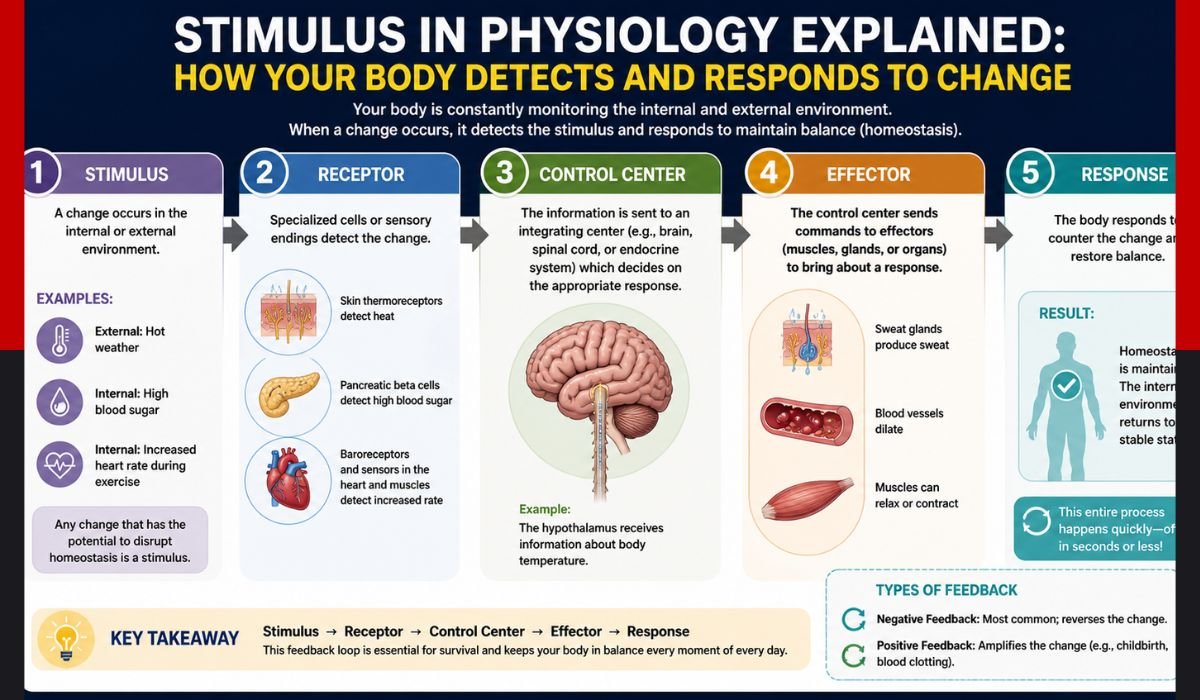
Introduction: Understanding Stimulus In Human Physiology
A Stimulus is one of the most fundamental ideas in biology and physiology because it explains how living organisms interact with their environment. Every moment of your life, your body is responding to Stimulus in some way, whether you are aware of it or not. A Stimulus can be anything that creates a change inside or outside your body, such as light, sound, temperature, pressure, or even internal changes like hunger or low oxygen levels.
In simple terms, a Stimulus is the starting point of almost every bodily response. From blinking when light is bright to pulling your hand away from a hot surface, your body is constantly detecting and reacting to Stimulus. This process involves a highly organized system that includes sensory receptors, the nervous system, and sometimes the endocrine system. Understanding Stimulus helps us understand how humans survive, adapt, and maintain balance in changing environments.
Quick Bio Information About Stimulus
Stimulus Is A Change Detected By The Body
Stimulus Can Be Internal Or External
Sensory Receptors Detect Stimulus In The Body
Stimulus Is Converted Into Electrical Signals
Nervous System Processes Stimulus Information
Brain Controls Final Response To Stimulus
Stimulus Must Reach Absolute Threshold To Be Detected
Photoreceptors Detect Light Stimulus In Eyes
Mechanoreceptors Detect Pressure And Touch Stimulus
Chemoreceptors Detect Chemical Stimulus
Thermoreceptors Detect Temperature Stimulus
Reflex Actions Are Fast Responses To Stimulus
Homeostasis Depends On Internal Stimulus Detection
Endocrine System Responds To Stimulus With Hormones
Adrenaline Is Released During Stress Stimulus
Vasopressin Helps Control Water Balance Stimulus
Pain Is A Strong Stimulus Detected By Nociceptors
Stimulus Helps Organisms Survive And Adapt
Every Sensory System Works Through Stimulus Detection
Meaning Of Stimulus In Biology And Physiology
In biology, a Stimulus refers to any detectable change that triggers a reaction in an organism. In physiology, it is more specifically linked to how the body senses and responds through biological systems.
A Stimulus can be external, like sound waves reaching your ears, or internal, like changes in blood pressure. Once detected, the body processes this information and produces a response to maintain stability or protect itself. This is a key part of how living organisms function efficiently in real-time environments.
How The Human Body Detects Stimulus
The human body detects Stimulus through specialized structures called sensory receptors. These receptors are found throughout the body, especially in the skin, eyes, ears, nose, and tongue. Each receptor is designed to respond to a specific type of Stimulus.
For example, photoreceptors in the eyes detect light, while mechanoreceptors in the skin detect pressure and touch. Chemoreceptors in the nose and tongue detect chemical changes, allowing us to smell and taste. Thermoreceptors help detect temperature changes. Once these receptors detect a Stimulus, they convert it into electrical signals that can be understood by the nervous system.
Internal And External Stimulus In The Human Body
Stimulus is broadly divided into two main categories: internal and external.
External Stimulus comes from the environment around us. This includes things like sunlight, loud noise, temperature changes, or physical touch. These types of Stimulus help the body interact with the outside world.
Internal Stimulus originates within the body itself. These include changes in blood sugar levels, oxygen levels, hydration, or body temperature. Internal Stimulus is extremely important for maintaining homeostasis, which is the body’s ability to stay balanced and stable.
Both types of Stimulus work together to ensure survival and proper functioning of the human body.
Role Of Sensory Receptors In Stimulus Detection
Sensory receptors act as the first point of contact in the Stimulus-response system. They continuously monitor changes in the environment and inside the body. When a Stimulus is detected, these receptors convert it into electrical signals through a process called signal transduction.
For example, when you touch something hot, receptors in your skin quickly detect the heat and send signals to your brain. This process happens in fractions of a second, allowing the body to respond quickly and protect itself from harm.
Without sensory receptors, the body would not be able to recognize Stimulus or respond appropriately.
The Nervous System And Processing Of Stimulus
Once a Stimulus is detected, the nervous system takes over the processing stage. Electrical signals travel through neurons from sensory receptors to the central nervous system, which includes the brain and spinal cord.
The brain analyzes the Stimulus and decides how the body should respond. This decision-making process happens extremely fast, allowing humans to react to danger or changes in the environment almost instantly.
For example, if you hear a sudden loud noise, your brain processes the Stimulus and may trigger a startle response. This rapid communication system is essential for survival and coordination.
Absolute Threshold And Detection Of Stimulus
Not every Stimulus can be detected by the body. A Stimulus must reach a certain level of intensity called the absolute threshold before it can be noticed.
The absolute threshold varies depending on the sense involved. For example, a very faint sound may not be heard, or a weak light may not be seen. Once the Stimulus crosses this threshold, the body becomes aware of it and responds accordingly.
This concept explains why we do not notice extremely weak or distant Stimulus in everyday life.
Sensory Systems And Types Of Stimulus
The human body responds to different types of Stimulus through specialized sensory systems.
Vision depends on light Stimulus detected by the eyes. Hearing depends on sound waves detected by the ears. Smell depends on airborne chemicals detected in the nose. Taste depends on chemicals in food detected by the tongue. Touch depends on physical pressure and temperature changes detected by the skin.
Each sensory system plays a unique role in helping humans understand and respond to their environment.
Stimulus And Reflex Actions In The Body
Some Stimulus trigger automatic responses known as reflex actions. These reactions occur without conscious thought and are controlled by the spinal cord.
For example, when you accidentally touch a hot object, your hand pulls away immediately before you even feel the pain. This quick response protects the body from injury and demonstrates how efficiently the Stimulus-response system works.
Reflex actions are essential for survival because they save time in dangerous situations.
Stimulus And Homeostasis In The Human Body
Homeostasis is the process of maintaining a stable internal environment in the body. Internal Stimulus plays a major role in this process.
For example, when body temperature rises, the body produces sweat to cool down. When blood sugar drops, hunger signals are triggered to encourage eating. These responses help maintain balance and ensure that the body functions properly.
Without Stimulus detection, the body would not be able to maintain internal stability.
Hormonal Response To Stimulus
The endocrine system also responds to Stimulus by releasing hormones into the bloodstream. These hormones help regulate long-term body responses.
One important hormone is adrenaline, which is released during stressful situations. It prepares the body for a fight-or-flight response by increasing heart rate and energy levels.
Another hormone, vasopressin, helps regulate water balance in the body when internal Stimulus like dehydration is detected. These hormonal responses ensure the body adapts effectively to internal and external changes.
Real Life Examples Of Stimulus Response
Everyday life is full of Stimulus-response actions. When you feel sunlight on your skin and move into shade, that is a response to heat Stimulus. When you hear your phone ring and pick it up, that is a response to sound Stimulus. When you feel hungry, your body is responding to internal chemical Stimulus related to energy levels.
Even emotional reactions are influenced by Stimulus. Stress, excitement, fear, and happiness can all be triggered by different internal and external changes. This shows how deeply Stimulus is connected to human behavior.
Importance Of Stimulus In Human Life
Stimulus is essential for survival because it allows humans to detect danger, find food, maintain balance, and interact with the environment. Without Stimulus, the body would not be able to react to changes or protect itself.
It also plays a key role in medicine, neuroscience, psychology, and biology. Understanding Stimulus helps scientists develop treatments for sensory disorders and improve knowledge of how the brain works.
Final Thoughts: How Stimulus Shapes Human Existence
Stimulus is at the heart of how the human body functions. It connects the outside world with internal biological systems, allowing the body to respond quickly and effectively. From simple reflex actions to complex hormonal responses, every part of the body depends on Stimulus detection and processing.
Understanding Stimulus gives us a deeper appreciation of how intelligent and responsive the human body truly is. It is not just a scientific concept but a continuous process that keeps us alive, aware, and adaptable in a constantly changing world.
FAQs About Stimulus In Physiology
What Is A Stimulus In Simple Words?
A Stimulus is any change in the environment inside or outside the body that causes a reaction. It can be something you see, hear, feel, taste, or even changes happening inside your body like hunger or pain.
What Are The Main Types Of Stimulus?
There are two main types of Stimulus: internal and external. Internal Stimulus comes from inside the body, such as changes in blood sugar or temperature. External Stimulus comes from the environment, such as light, sound, touch, and heat.
How Does The Body Respond To A Stimulus?
The body responds to Stimulus through sensory receptors, the nervous system, and sometimes hormones. Receptors detect the change, the brain processes it, and the body produces an appropriate response like movement or hormonal release.
What Is The Role Of The Nervous System In Stimulus?
The nervous system acts as the communication network of the body. It carries signals from sensory receptors to the brain and sends instructions back to muscles or organs to respond quickly and effectively to a Stimulus.
What Is The Absolute Threshold Of A Stimulus?
The absolute threshold is the minimum level of Stimulus needed for it to be detected. If the Stimulus is too weak, the body will not notice it. Once it crosses this threshold, the body can sense and respond to it.
Why Is Stimulus Important For The Human Body?
Stimulus is important because it helps the body detect danger, maintain balance, and interact with the environment. Without Stimulus, humans would not be able to respond to changes or survive effectively.
What Is An Example Of A Reflex Response To Stimulus?
A common example is pulling your hand away from a hot surface. This happens instantly without thinking because the Stimulus triggers a reflex action through the spinal cord.
How Does Stimulus Help Maintain Homeostasis?
Stimulus helps maintain homeostasis by signaling when the body is out of balance. For example, if body temperature rises, a Stimulus triggers sweating to cool the body down and restore balance.
Please Read Also: Best Motels Cocoa: Affordable Stays For Every Traveler
